Toko
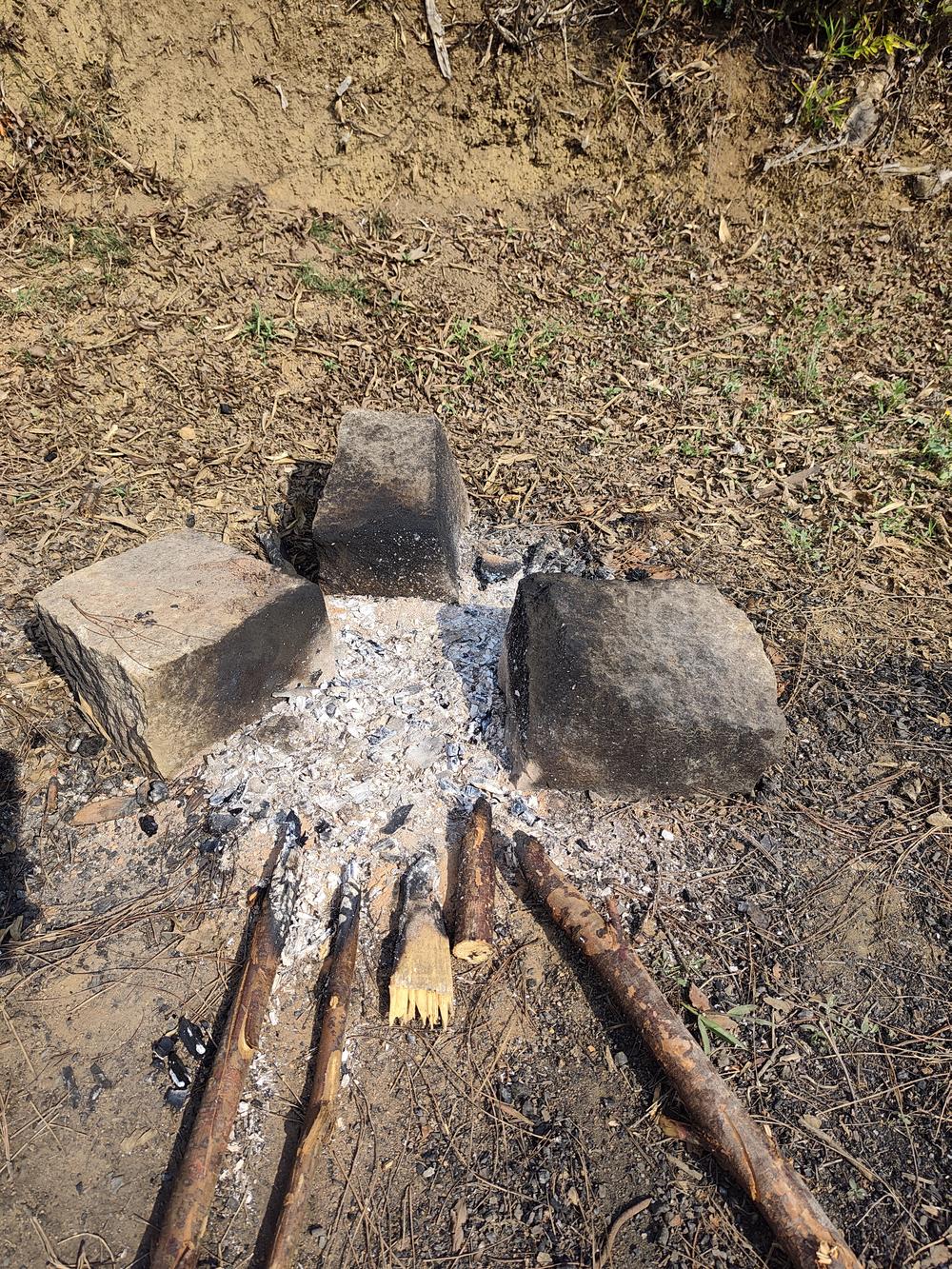
This is what we call “Toko” in the Malagasy language: the hearth stones, a trivet that supports a cooking pot. I took this photo very recently. “Toko” sounds almost like the English word “took”. And the pieces of wood that did not burn completely are called “forohana”.
The hearth has its own expressions:
- Toko telo nahamasa-nahandro: the three stones that cooked the meal.
- Tsy toko tsy forohana: no hearth stones, no unburned wood. Strangely, it can mean two opposite things, depending on the context. Either “there is plenty”, like plenty of money, or “there is nothing”, like when you have nothing left.
Most Malagasy words have multiple meanings, depending on the context in which we use them. Toko is one of them.
Other playful expressions illustrate this diversity of meaning. Take the following examples:
- Manoko resaka: starting a conversation (usually a very long one).
- Manoko sikidy: piling up the sikidy (the traditional Malagasy geomancy).
- Antoko mpihira: a choral group.
- Toko voalohany: chapter 1, or the first chapter.
Most meanings of Toko revolve around grouping things. But there are some exceptions. For example, “Manokom-bary” means cooking rice.
Why am I talking about all this?
Right now, I’m cooking a few interesting things that I will release publicly very soon. And I invite you to take the Avara-patana (*) for this one, as tradition demands for honored guests.
So first, find a comfortable place. Soon, I’ll open the cooking pot and share some of what’s inside 😁.
(*) In a traditional Malagasy house, the fatana (the hearth) is the central reference point. The Avara-patana, or the north side of the hearth, is the place for honored guests.